
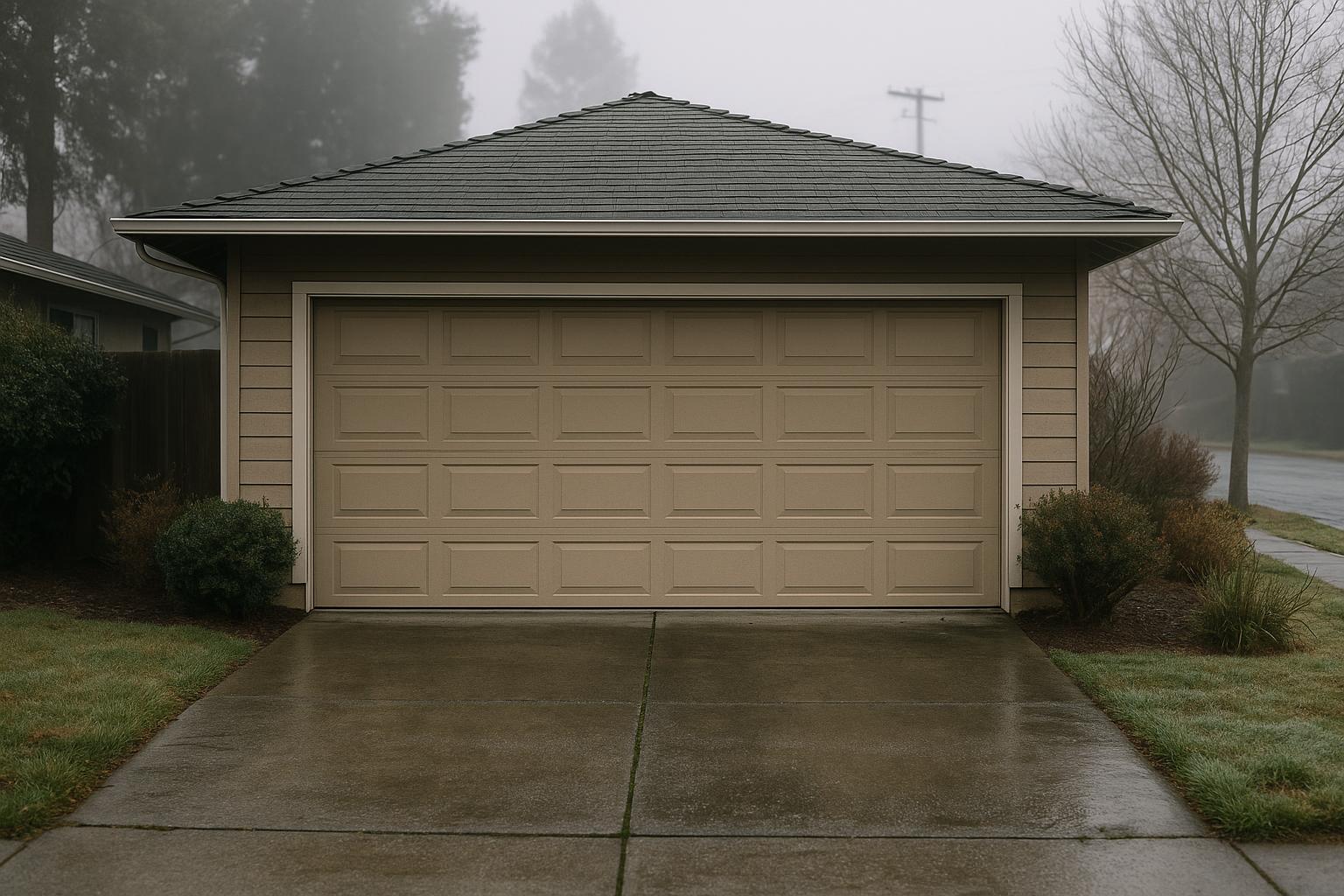
San Jose Winters Are Mild — But Your Garage Door Still Feels the Chill
When people think about cold weather and garage doors, they usually picture frozen panels in Minnesota or ice-coated springs in New England. San Jose doesn't get that kind of extreme cold, but our winter mornings can dip into the mid-30s and low 40s — and that's enough to cause real problems for your garage door system.
If you've noticed your garage door moving slower than usual, making new noises, or struggling to open on a chilly morning, you're not imagining things. Temperature changes affect metal components, lubricants, and even the rubber seals around your door. Here's what's happening and what you can do to keep everything running smoothly through the cooler months.
How Cold Temperatures Impact Garage Door Springs
Your garage door springs do the heavy lifting — literally. They counterbalance the weight of the door so your opener doesn't have to strain. Most residential doors in San Jose use torsion springs mounted above the door opening, and these springs are made of steel.
When temperatures drop, steel contracts slightly. That contraction changes the tension in your springs, which can make the door feel heavier to the opener. You might notice:
- The door opening more slowly than usual
- The opener motor straining or making louder sounds
- The door not opening all the way on the first attempt
- A slight gap at the bottom when the door is closed
In most cases, this is temporary — the springs return to normal as the day warms up. But if your springs are already aging or weakened, cold weather can push them past their limit and cause a break. A broken spring is one of the most common garage door repairs we handle in San Jose, and it tends to spike during colder stretches in December and January.
What You Can Do
If your springs are more than seven or eight years old and you're noticing sluggish performance on cold mornings, it's worth having them inspected. Replacing worn springs before they snap is safer and often less expensive than an emergency repair.
Lubricant Thickens and Components Stiffen
The moving parts of your garage door — hinges, rollers, tracks, and the spring system — rely on lubrication to operate quietly and smoothly. When temperatures drop, that lubricant can thicken and become less effective. The result is a door that sounds louder, moves jerkily, or feels stiff when operating.
This is especially noticeable if your garage door hasn't been maintained in a while. Old, dried-out lubricant combined with cooler temperatures creates a lot of friction in the system, which puts extra wear on your opener and hardware.
What You Can Do
Apply a silicone-based garage door lubricant to the springs, hinges, rollers, and tracks. Avoid using WD-40 as a long-term lubricant — it's great for loosening stuck parts, but it evaporates quickly and doesn't provide lasting protection. A proper silicone or lithium-based spray will hold up much better through temperature swings. If you're not sure which products to use or how to apply them safely, a professional maintenance tune-up covers all of this.
Weatherstripping Cracks and Shrinks
The rubber weatherstripping along the bottom of your garage door and around the frame serves two important purposes: it keeps cold air, moisture, and pests out, and it helps create a seal that improves energy efficiency. Over time, rubber naturally dries out and loses flexibility. Cold weather accelerates this process.
Cracked or shrunken weatherstripping lets in drafts, which matters more than you might think. Many San Jose homeowners use their garage as a workshop, gym, or extra living space. Even if you don't, a drafty garage can affect the temperature of adjacent rooms and increase your heating bill.
What You Can Do
Inspect the weatherstripping along the bottom of your door and around the sides and top of the frame. If you see cracks, gaps, or sections that have pulled away, it's time for a replacement. Bottom seals are relatively inexpensive and can be replaced without removing the door. Precision Garage Door can handle this during a routine maintenance visit.
Your Garage Door Opener Works Harder in the Cold
Your garage door opener is essentially an electric motor with a drive mechanism. Like any motor, it performs differently in cold conditions. The grease inside the opener's gear assembly can thicken, and the motor has to work harder to move a door that's already stiffer due to contracted springs and thickened lubricant on the tracks.
If your opener is older — especially if it's a chain-drive model — you might hear it laboring more on cold mornings. Over time, this extra strain can shorten the lifespan of the motor and gear assembly.
Signs Your Opener Is Struggling
- The motor runs longer than usual before the door fully opens or closes
- You hear grinding or humming sounds when the door operates
- The door hesitates or pauses partway through its travel
- The opener's light blinks error codes after operation
If any of these sound familiar, it's worth having the opener inspected before a minor issue turns into a complete failure.
Metal Tracks Can Shift Slightly
The metal tracks that guide your garage door panels can expand and contract with temperature changes. In most cases, this isn't dramatic enough to cause problems. But if your tracks were already slightly misaligned or had loose mounting brackets, thermal contraction can make the issue worse.
A misaligned track can cause the door to bind, make scraping noises, or even jump off the track entirely. Off-track doors are a safety hazard and should be addressed by a professional — the door is under significant tension and can cause serious injury if handled incorrectly.
What You Can Do
Visually inspect your tracks for gaps between the rail and the mounting brackets. Look for any bends, dents, or areas where the rollers seem to catch. If something looks off, don't try to force the door. Call a technician to assess and realign the system safely.
A Seasonal Tune-Up Goes a Long Way
The best way to prevent cold-weather garage door problems is to schedule a maintenance tune-up before the cooler months hit. During a tune-up, a technician will:
- Inspect and lubricate all moving parts
- Check spring tension and condition
- Tighten loose hardware and brackets
- Test the opener's force and travel settings
- Inspect weatherstripping and seals
- Check track alignment and roller condition
This kind of preventive care catches small issues before they become expensive repairs, and it keeps your door operating safely and quietly all year long.
Don't Wait for a Breakdown
San Jose homeowners often overlook their garage door until something goes wrong. But a little attention before winter — or at the first sign of cold-weather sluggishness — can save you time, money, and the hassle of being stuck with a door that won't open on a busy morning.
If your garage door is acting up this season, Precision Garage Door of San Jose is here to help. We offer same-day service for most repairs and thorough maintenance tune-ups that keep your door in top shape no matter what the weather does. Give us a call or schedule an appointment online — we'll make sure your garage door is ready for whatever the season brings.