
You've Picked Out Your New Garage Door — Now What?
You've done the research, compared styles, and finally decided on a new garage door for your San Jose home. But now a practical question is nagging at you: how long is this actually going to take? Will you need to take the whole day off work? Will your car be trapped in the garage — or stuck in the driveway — for hours on end?
It's a fair question, and one we hear all the time at Precision Garage Door of San Jose. The answer depends on several factors, but most homeowners are pleasantly surprised by how quickly a professional installation comes together. Let's walk through what determines the timeline and what you can expect on installation day.
The Short Answer: 4 to 6 Hours for Most Installations
A standard single garage door installation typically takes about 3 to 5 hours. A double (two-car) garage door usually takes 4 to 6 hours. If you're also having a new garage door opener installed at the same time, add another hour or so to the estimate.
These timeframes assume a straightforward replacement — removing the old door and installing the new one on an existing track system with no major structural issues. Most residential installations in San Jose fall into this category.
What Factors Affect Installation Time?
Not every installation is identical. Here are the variables that can make the job faster or slower:
1. Single Door vs. Double Door
This one is obvious. A wider, heavier double garage door has more panels, more hardware, and requires more precise balancing. It simply takes longer to install than a single door.
2. Type of Garage Door
The style and material of your new door matters. A basic steel raised-panel door is relatively quick to assemble and hang. A carriage-style door with decorative hardware, a wood composite door, or an insulated door with multiple layers will require additional time for assembly and fitting.
3. Condition of the Existing Setup
If your current tracks, brackets, and framing are in good shape, the installer can often reuse parts of the existing infrastructure. But if there's rust, rot, or damage to the door frame or header, those issues need to be addressed before the new door goes up. Older homes in neighborhoods throughout San Jose and surrounding areas like Campbell, Los Gatos, and Saratoga sometimes have framing that needs reinforcement — especially if the homeowner is upgrading to a heavier door.
4. New Opener Installation
Many homeowners choose to install a new garage door opener at the same time as their new door. This is smart — pairing a new door with an outdated opener can lead to performance issues. But it does add time to the project, typically 45 minutes to 1.5 hours depending on the opener type (chain drive, belt drive, or wall-mounted).
5. Custom Sizes or Non-Standard Openings
If your garage opening isn't a standard size, the installation may require custom fitting, additional track work, or modifications to the spring system. This is more common in older or custom-built homes.
What Happens During Installation Day?
Knowing the general timeline is helpful, but understanding the actual process can ease a lot of the anxiety homeowners feel about a big home improvement project. Here's a step-by-step overview:
- Removal of the old door: The technician disconnects the opener, releases the spring tension safely, and removes the old panels, tracks, and hardware. This usually takes 30 to 60 minutes.
- Inspection of the opening: Before installing anything new, a good technician inspects the framing, header, and floor seal to make sure everything is square, level, and structurally sound.
- Installation of new tracks and hardware: New vertical and horizontal tracks are mounted, along with brackets, hinges, and rollers.
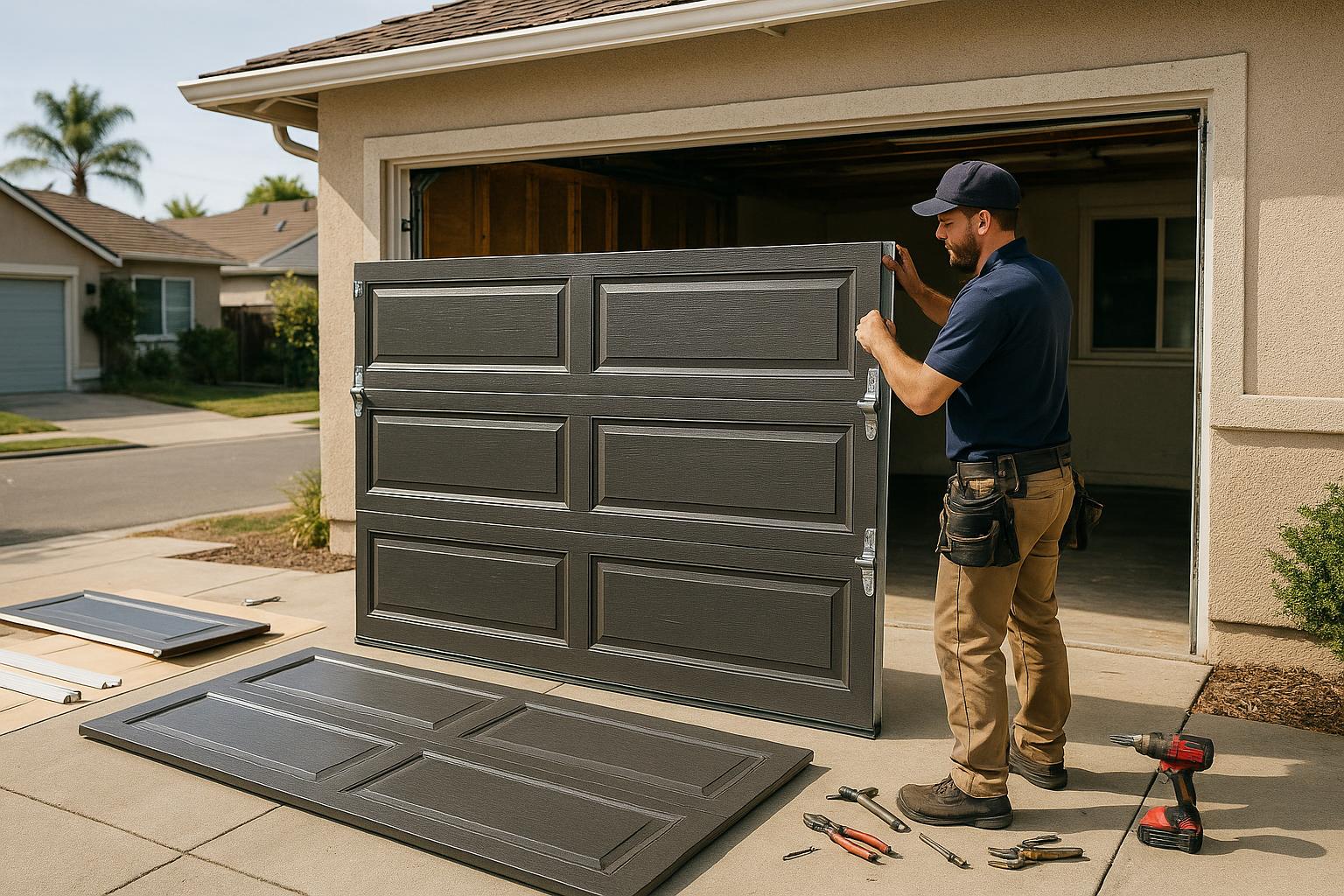
- Panel assembly and hanging: The door panels are installed one at a time from the bottom up. Each panel is connected to the tracks with rollers and hinged to the panel below it.
- Spring installation and balancing: The torsion or extension springs are installed and carefully calibrated so the door opens and closes smoothly and stays in place when partially open. This is one of the most critical — and dangerous — steps, which is why it should always be handled by a trained professional.
- Opener connection and programming: If a new opener is being installed, it's mounted, wired, and connected to the door. The travel limits and force settings are adjusted, and the remote controls are programmed.
- Testing and walkthrough: The technician runs the door through multiple open-close cycles, checks the safety sensors, and walks you through the features of your new door and opener.
Can You Use Your Garage During Installation?
For most of the installation, your garage will be inaccessible. The opening will be exposed while the old door is removed and the new one is being installed, so you'll want to plan accordingly. Here are a few tips:
- Park your car in the driveway or on the street before the technician arrives.
- Move any items near the garage door opening to the sides or back of the garage.
- If you work from home, let the installer know so they can give you a heads-up before any loud work begins.
- Keep pets and children away from the work area for safety.
Should You Be Home During the Installation?
We recommend it. While you don't need to hover over the technician's shoulder, being home allows you to ask questions, make decisions if anything unexpected comes up, and do the final walkthrough when the job is complete. Most San Jose homeowners find it's worth being present — and the process is far less disruptive than they expected.
What About Permits?
In most cases, a straightforward garage door replacement in San Jose does not require a building permit. However, if structural modifications are being made to the opening — such as widening the frame or adding a header — a permit may be needed. Your installer should be upfront about this during the estimate phase.
The Bottom Line: It's Faster Than You Think
A new garage door is one of the highest-ROI home improvements you can make, and the installation process is far less intimidating than most people imagine. In most cases, you'll have a brand-new, fully operational garage door by the end of a single morning or afternoon.
At Precision Garage Door of San Jose, we handle every step of the process — from helping you choose the right door for your home and budget to completing a clean, professional installation. We serve homeowners across San Jose, Santa Clara, Cupertino, Saratoga, Campbell, and Los Gatos, and we pride ourselves on showing up on time, working efficiently, and leaving your garage better than we found it.
Ready to get started? Contact us today for a free estimate and find out how easy a new garage door installation can be.