
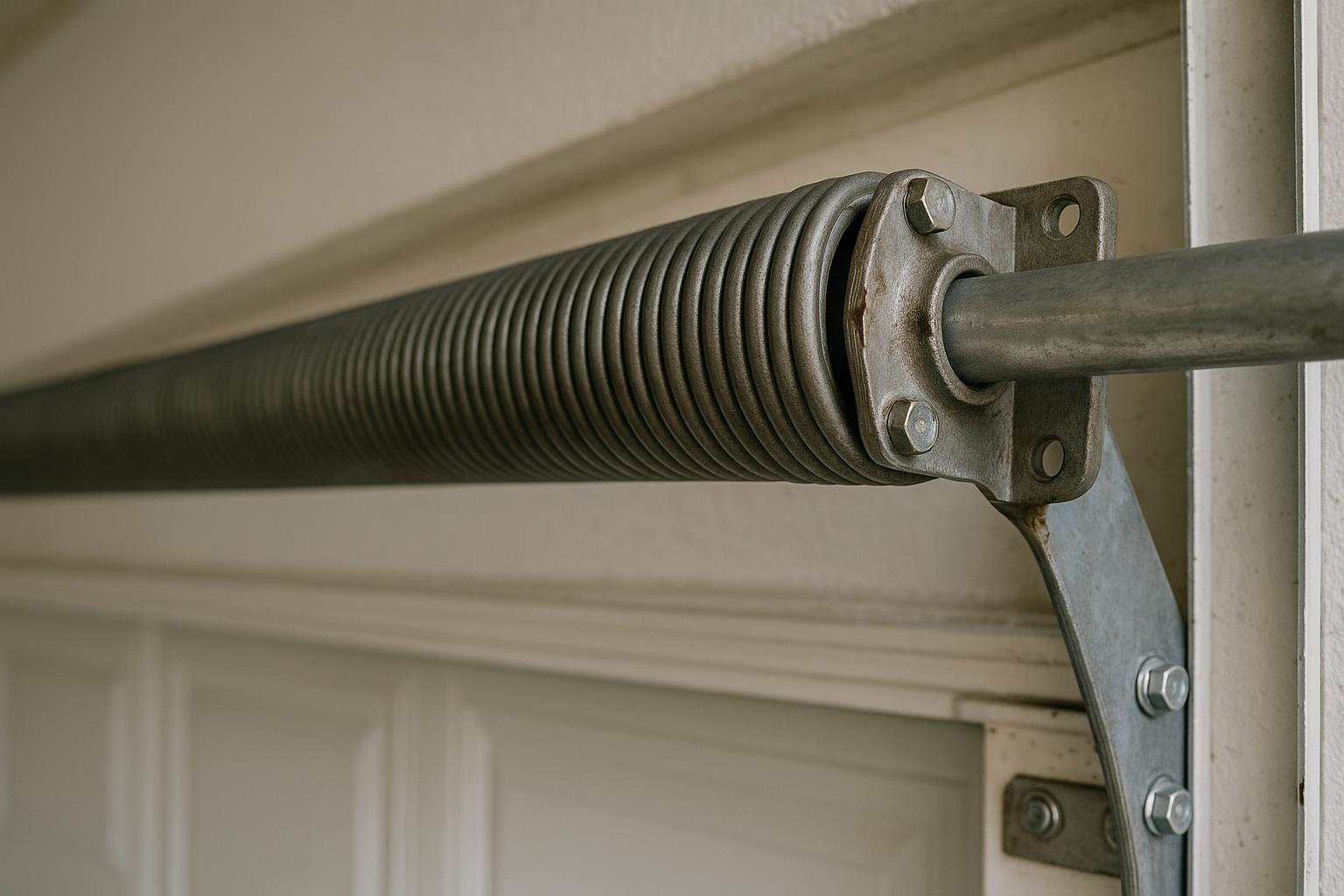
Your Garage Door Springs Are Doing More Work Than You Think
Most homeowners in San Jose open and close their garage door at least four times a day. That adds up to roughly 1,500 cycles per year — and every single one of those cycles depends on your garage door springs. These tightly wound components bear the full weight of your door, which can range from 130 pounds for a single-car door to over 400 pounds for a heavy insulated two-car door.
Despite how critical they are, garage door springs are one of the most overlooked parts of your home. Most people never think about them until something goes wrong. The good news is that failing springs almost always give warning signs before they break completely. Knowing what to look for can save you from getting stuck with a door that won't open — or worse, a dangerous situation.
How Long Do Garage Door Springs Last?
The lifespan of a garage door spring is measured in cycles, not years. A standard torsion spring is rated for about 10,000 cycles. If your household uses the garage door four times a day, that translates to roughly seven years of use.
However, several factors can shorten that lifespan:
- Lack of maintenance: Springs that aren't lubricated regularly develop more friction and wear out faster.
- Rust and corrosion: While San Jose doesn't get extreme weather, moisture and temperature fluctuations can still cause rust on unprotected springs.
- Improper balance: If your door was installed slightly off-balance, one spring may be doing more work than the other, leading to premature failure.
- Heavy doors: Thicker insulated doors or doors with extra hardware put more strain on springs with every cycle.
High-cycle springs rated for 25,000 or even 50,000 cycles are available and are a worthwhile investment if you plan to stay in your home long-term.
7 Warning Signs Your Garage Door Springs Are Failing
1. The Door Feels Heavier Than Usual
Try this simple test: disconnect your garage door opener by pulling the emergency release cord, then manually lift the door about halfway. A properly balanced door should stay in place on its own. If it feels unusually heavy or slams down the moment you let go, your springs are losing tension and struggling to support the door's weight.
2. The Door Opens Unevenly or Crooked
If one side of your garage door rises faster than the other, it often means one spring has weakened more than its counterpart. This uneven movement puts stress on the tracks, rollers, and opener, potentially causing additional damage if left unaddressed.
3. You Hear a Loud Bang From the Garage
A sudden, loud bang — almost like a firecracker — coming from your garage usually means a spring has snapped. The sound is caused by the spring unwinding violently and releasing all its stored energy at once. If this happens, do not try to operate the door. A broken spring under tension is extremely dangerous.
4. There's a Visible Gap in the Spring
Take a look at the torsion spring mounted above your garage door. An intact spring is a continuous, tightly wound coil. If you see a gap of an inch or two somewhere along the coil, the spring has broken and needs immediate replacement.
5. The Opener Struggles or Stops Mid-Cycle
Your garage door opener is designed to lift a balanced door, not to do the heavy lifting on its own. When springs weaken, the opener has to work much harder. You might notice it straining, moving slower than usual, or stopping partway through the cycle. Continuing to run the opener under these conditions can burn out the motor.
6. Cables Are Loose or Hanging
The cables on either side of your garage door work in tandem with the springs. When a spring breaks, the cables can lose tension and appear loose, tangled, or hanging off the drum. Loose cables are a clear sign of a spring problem and should be inspected by a professional.
7. The Door Won't Open at All
This is the most obvious sign. If your garage door opener activates but the door barely lifts — or doesn't move at all — there's a strong chance both springs have failed or a single spring on a one-spring system has broken.
Why You Should Never Replace Garage Door Springs Yourself
We understand the DIY spirit is strong among San Jose homeowners, and there are plenty of garage door tasks you can handle on your own, like lubricating hinges or tightening hardware. Spring replacement is not one of them.
Garage door torsion springs are under an enormous amount of tension. A standard spring for a two-car door stores enough energy to cause serious injury — or worse — if it's released improperly. Professional technicians use specialized tools, including winding bars and clamps, and follow strict safety procedures to replace springs without incident.
Beyond safety, there's also the issue of proper sizing. Springs must be matched precisely to your door's weight, height, and track configuration. Installing the wrong spring can lead to poor balance, premature wear on other components, and recurring problems.
What to Expect During a Professional Spring Replacement
When you call a garage door professional in San Jose for a spring replacement, here's what typically happens:
- Inspection: The technician inspects the entire door system — not just the springs — to identify any related issues with cables, drums, bearings, or the opener.
- Spring selection: The correct spring size and type are determined based on your door's specifications. If you have a two-spring system and only one has broken, most professionals recommend replacing both at the same time since the second spring is likely near the end of its life as well.
- Installation: The old spring is safely unwound and removed, and the new spring is installed, wound to the correct tension, and tested.
- Balancing and testing: The door is balanced, the safety features are tested, and the opener is adjusted if necessary.
The entire process usually takes about an hour, and a reputable company will clean up and walk you through what was done before leaving.
Extend the Life of Your New Springs
Once you've had your springs replaced, a little preventive care goes a long way:
- Lubricate the springs with a silicone-based spray every three to four months to reduce friction and prevent rust.
- Schedule an annual tune-up to catch small issues before they become expensive repairs.
- Listen for changes in how your door sounds. Squeaking, grinding, or popping noises are early indicators that something needs attention.
Don't Wait for a Broken Spring to Ruin Your Day
A broken garage door spring always seems to happen at the worst possible time — when you're heading to work, picking up the kids, or trying to get groceries inside. If you've noticed any of the warning signs above, it's worth having a professional take a look before the spring fails completely.
At Precision Garage Door of San Jose, we provide honest assessments and upfront pricing on every spring replacement. We serve homeowners throughout San Jose, Campbell, Cupertino, Los Gatos, Saratoga, and Santa Clara. Give us a call, and we'll get your door working safely and smoothly again.