
Your Garage Door Shouldn't Sound Like That
You press the button on your garage door opener and instead of a smooth, quiet operation, you hear something that sounds like a freight train rolling through your garage. Maybe it's a high-pitched squeal. Maybe it's a rhythmic grinding. Maybe it's a loud bang that makes you flinch every time the door reaches the top of the track.
Whatever the noise, it's not normal — and it's not something you should ignore. Garage door noises are almost always a sign that something needs attention, and catching the problem early can save you from an expensive emergency repair down the road.
If you're a homeowner in San Jose dealing with a noisy garage door, here's a breakdown of the most common sounds, what they mean, and what you should do about each one.
Squealing or Screeching Sounds
A high-pitched squeal when your garage door opens or closes is one of the most common complaints we hear from homeowners. It's also one of the easiest problems to address — most of the time.
What causes it:
- Lack of lubrication. Metal rollers, hinges, and springs need regular lubrication to operate smoothly. Over time, the lubricant dries out, and metal-on-metal contact creates that awful screeching noise.
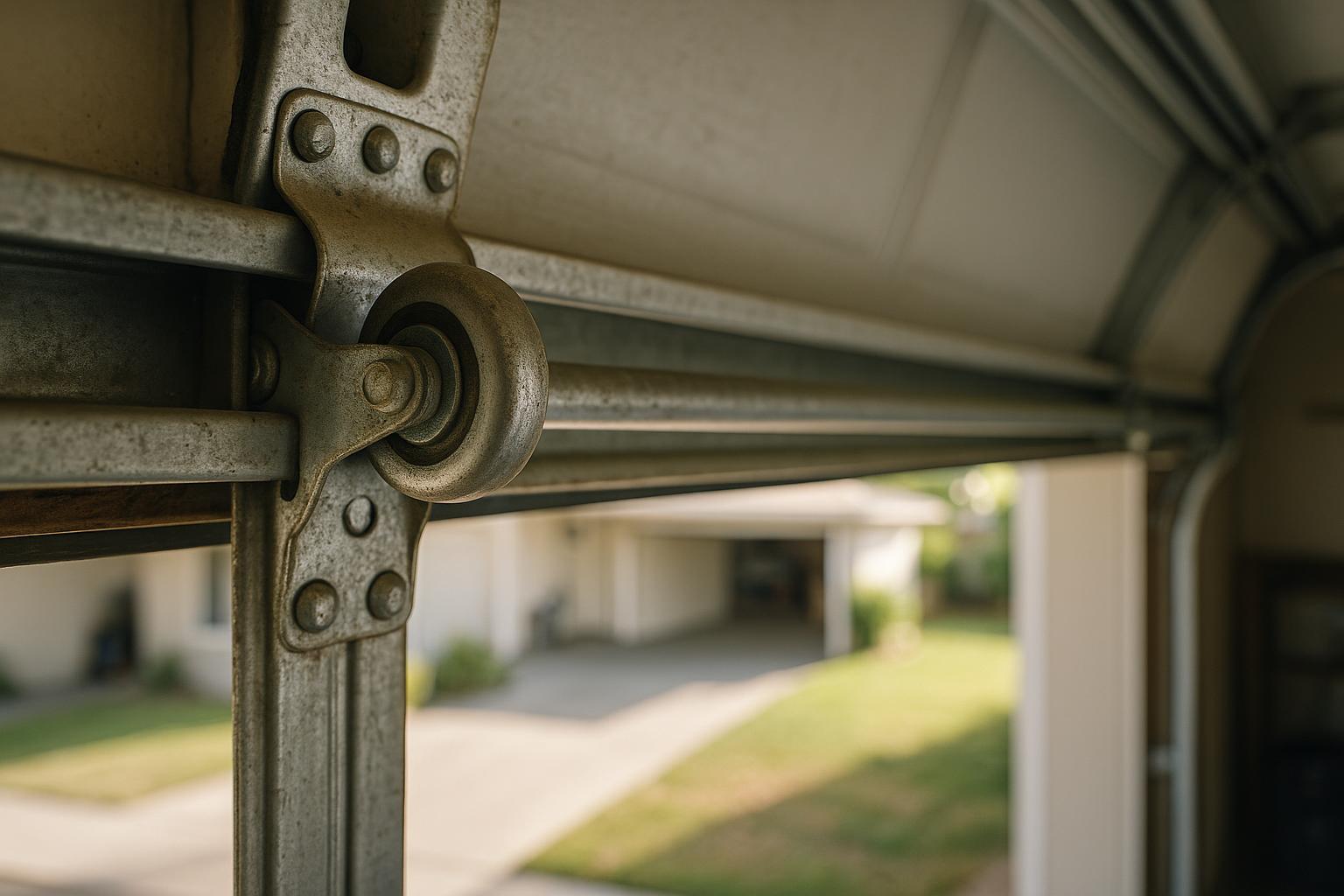
- Worn-out rollers. If your garage door uses steel rollers (as opposed to nylon), they wear down over time and start squealing as they travel along the track.
- Bearing issues. The bearings in your rollers or spring system can degrade, especially in older doors that haven't been serviced in a while.
What to do: Start by applying a garage door-specific lubricant (not WD-40, which is a solvent, not a lubricant) to the rollers, hinges, springs, and bearing plates. If the noise persists, your rollers may need to be replaced. Upgrading to nylon rollers is a popular choice among San Jose homeowners because they're significantly quieter and require less maintenance.
Grinding or Scraping Sounds
Grinding is a more serious noise that usually indicates a mechanical problem rather than a simple lubrication issue.
What causes it:
- Misaligned tracks. If the metal tracks on either side of your garage door are bent, dented, or out of alignment, the rollers will grind against them as the door moves.
- Debris in the tracks. Small rocks, dirt, leaves, and other debris can accumulate in the tracks and cause grinding or scraping as the door passes over them.
- Worn gears in the opener. If the grinding noise seems to be coming from the ceiling-mounted opener unit rather than the door itself, the internal gears may be stripped or worn out.
What to do: Inspect the tracks visually for obvious bends, dents, or debris. You can clean the tracks with a damp cloth, but don't try to bend them back into shape yourself — improperly adjusted tracks can cause the door to come off entirely. If the grinding is coming from the opener, the gear and sprocket assembly likely needs to be replaced by a technician.
Rattling or Vibrating Sounds
A rattling garage door sounds like loose change in a tin can. It's annoying, and it can get worse over time if you don't address it.
What causes it:
- Loose hardware. Your garage door has dozens of nuts, bolts, screws, and brackets. The constant vibration of daily operation causes them to loosen gradually.
- Loose chain or belt on the opener. If the drive chain or belt on your garage door opener has too much slack, it can vibrate and rattle during operation.
- Unsecured opener mounting. The opener unit itself can rattle if the mounting brackets or support struts have loosened from the ceiling.
What to do: Grab a socket wrench and tighten all the visible bolts and screws on the door's hinges, brackets, and track mounts. Check the opener's chain tension — most openers have an adjustment mechanism for this. If you're not sure how to adjust it, your owner's manual or a quick call to a garage door professional can point you in the right direction.
Loud Banging or Popping Sounds
This is the noise that scares people — and for good reason. A loud bang or pop from your garage door usually signals a more urgent problem.
What causes it:
- Torsion spring issues. If you hear a single, extremely loud bang — almost like a gunshot — and your garage door suddenly won't open, a torsion spring has likely snapped. This is the most common cause of sudden, dramatic garage door noises.
- Panel or section shifting. If the banging happens every time the door opens or closes, a panel may be warped or a section may be shifting out of position as it moves through the tracks.
- Opener force settings. If the opener is applying too much force, the door can slam into the floor or jerk at the top of its travel, creating a banging sound.
What to do: If a spring has broken, do not attempt to operate the door. Broken torsion springs are under extreme tension and are dangerous to handle without proper tools and training. Call a professional immediately. For banging related to panels or force settings, a technician can diagnose the issue during a routine inspection and make adjustments safely.
Humming or Buzzing Without Movement
If you press the button and hear the opener hum or buzz but the door doesn't move, that's a distinct problem from the noises above.
What causes it:
- The door is disconnected from the opener. If someone pulled the emergency release cord (the red handle hanging from the opener rail), the door is disengaged and the opener will run without moving it.
- A stripped gear inside the opener. The motor runs, but the gear that transfers power to the drive mechanism is too worn to engage.
- The door is stuck or obstructed. If something is preventing the door from moving — a broken spring, a jammed track, or even a locked manual latch — the motor will strain and hum without being able to lift the door.
What to do: Check whether the emergency release has been pulled and re-engage it if needed. If the door still won't move, don't keep pressing the button — you risk burning out the opener motor. Have a technician inspect the system to find the root cause.
When to Schedule a Professional Inspection
Some garage door noises are minor annoyances that a little lubrication can fix. Others are early warnings of a failure that could leave you stuck — or worse, create a safety hazard for your family.
As a general rule, call a professional if:
- The noise started suddenly and is significantly louder than before
- You hear grinding or scraping that doesn't improve after cleaning the tracks
- A spring has visibly snapped or the door feels unusually heavy to lift manually
- The opener runs but the door doesn't move
- You've tightened everything and lubricated everything and the noise persists
At Precision Garage Door of San Jose, we diagnose noisy garage doors every day across San Jose, Campbell, Cupertino, and the surrounding communities. Our technicians will identify exactly what's causing the noise, explain your options clearly, and fix the problem so your door runs quietly and safely again.
Don't Wait for a Noise to Become a Breakdown
The biggest mistake homeowners make with a noisy garage door is assuming it will go away on its own. It won't. In most cases, the noise gets progressively worse until something fails entirely — usually at the worst possible time.
If your garage door is making sounds it didn't used to make, take it seriously. A quick inspection now can prevent a costly repair later and keep your garage door operating smoothly for years to come.