
Your Garage Door Won't Stay Closed — Now What?
You press the button on your garage door remote, the door starts its descent, and then — just before it reaches the floor — it reverses direction and goes right back up. You try again. Same thing. Maybe you try holding the wall button down, and it still won't cooperate.
This is one of the most common garage door complaints we hear from homeowners across San Jose, and it's understandably frustrating. A garage door that won't close leaves your home, your vehicles, and your belongings exposed. The good news is that this problem usually has a straightforward explanation, and in many cases, the fix is simpler than you'd expect.
Understanding Why Garage Doors Reverse
Modern garage door openers are equipped with safety features mandated by federal law since 1993. These features exist to prevent the door from closing on a person, pet, or object. While these systems save lives, they can also trigger false reversals when something goes wrong with the components involved.
There are two primary safety systems at work in most garage door openers:
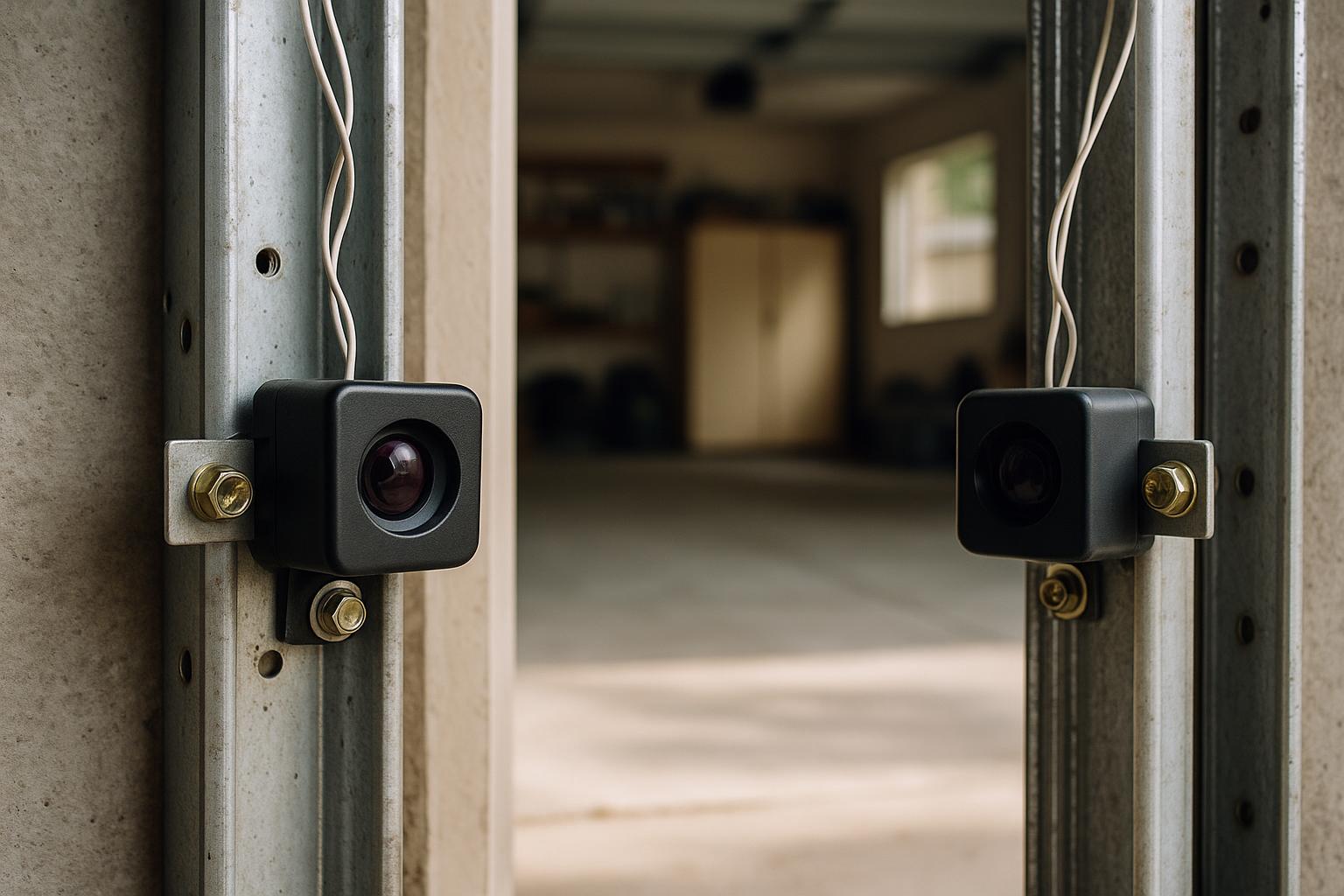
- Photo-eye sensors: These are the small devices mounted near the bottom of your garage door tracks on either side. They project an invisible beam across the doorway. If anything breaks that beam, the door reverses.
- Auto-reverse force settings: The opener monitors how much resistance the door encounters while closing. If it senses too much resistance — or thinks it does — it reverses to prevent crushing something underneath.
When your door reverses unexpectedly, one of these two systems is almost always involved. Let's walk through the most common culprits.
Misaligned or Dirty Photo-Eye Sensors
This is the number one reason garage doors reverse before reaching the ground, and it's often the easiest to fix. The photo-eye sensors on either side of your garage door opening need to be perfectly aligned with each other. If one gets bumped — by a bicycle, a trash can, a lawnmower, or even a curious kid — the beam is broken, and the opener interprets that as an obstruction.
Here's what to check:
- Alignment: Look at both sensors. Most have a small LED light. Typically, one glows green (the receiving sensor) and one glows amber (the sending sensor). If the green light is flickering or off, the sensors are misaligned. Gently adjust the sensor bracket until the green light holds steady.
- Dirt and debris: San Jose's dry summers can coat sensor lenses with dust, pollen, and cobwebs. A quick wipe with a soft cloth can solve the problem instantly.
- Sunlight interference: In the late afternoon, direct sunlight can overwhelm the sensor's infrared beam. If your garage faces west, this could be a seasonal issue. A small shade or cardboard tube around the receiving sensor can help.
Incorrect Force or Travel Settings
Your garage door opener has adjustable settings that control how far the door travels and how much force it uses to close. If these settings are off, the opener may think the door is hitting something when it's actually just reaching the floor.
This commonly happens after:
- A spring replacement or cable repair
- Installing a new garage door
- Temperature changes that cause metal tracks to expand or contract
- Normal wear and tear over several years
Most openers have adjustment screws or digital controls for the down-travel limit and the close-force setting. However, we recommend caution here. Setting the force too high can create a genuine safety hazard, as the door may not reverse when it should. If you're not confident in making these adjustments, it's worth having a professional handle it.
Worn or Broken Garage Door Components
Sometimes the reversal isn't a sensor or settings issue at all — it's a mechanical problem with the door itself. When components wear out, they create extra friction or resistance that the opener interprets as an obstruction.
Damaged Rollers
Garage door rollers wear down over time. Cracked, chipped, or seized rollers create significant friction as the door moves along the tracks. This added resistance can trigger the auto-reverse feature. If you hear grinding or scraping noises along with the reversal, worn rollers are a likely suspect.
Bent or Misaligned Tracks
The metal tracks that guide your garage door need to be properly aligned and free of dents. Even a small bend can cause the door to bind, creating enough resistance to trigger a reversal. This is especially common in older homes throughout neighborhoods like Willow Glen, Cambrian, and Almaden Valley, where garage door systems may have decades of wear.
Spring Problems
Your garage door springs do the heavy lifting — literally. They counterbalance the weight of the door so the opener only needs to provide a small amount of force. When springs weaken or break, the full weight of the door falls on the opener. The opener senses this extreme resistance and reverses. If you notice your door seems heavier than usual or you hear a loud bang from the garage, a broken spring is very likely the cause.
Important: Garage door springs are under extreme tension and can cause serious injury. Spring replacement should always be handled by a trained technician.
Wiring and Electrical Issues
Less commonly, the problem may be electrical. Frayed sensor wires, loose connections, or a failing logic board in the opener can all cause erratic behavior, including random reversals. Rodents occasionally chew through sensor wiring in garages, which is something we see periodically in homes near the foothills of East San Jose and parts of Los Gatos.
If you've checked the sensors, cleaned the lenses, and verified there's no physical obstruction, an electrical issue may be to blame. A qualified garage door technician can diagnose wiring problems quickly using basic testing tools.
What You Can Do Right Now
Before calling for service, try these quick troubleshooting steps:
- Check for any objects near or between the photo-eye sensors at the bottom of the door tracks.
- Clean both sensor lenses with a soft, dry cloth.
- Verify that both sensor LED lights are lit and steady — not blinking.
- Gently realign the sensors if one appears to have shifted.
- Try closing the door using the wall-mounted button while holding it continuously. On most openers, this overrides the photo-eye sensors (the door will still auto-reverse on physical contact).
If the door closes normally when you hold the wall button, the issue is almost certainly with your photo-eye sensors. If it still reverses, the problem is likely mechanical or related to force settings.
When to Call a Professional
If basic troubleshooting doesn't resolve the issue, or if you suspect a broken spring, damaged track, or electrical problem, it's time to bring in a professional. Attempting to repair springs, cables, or opener wiring without proper training and tools can lead to injury or further damage to your door system.
At Precision Garage Door of San Jose, we diagnose reversal issues every week for homeowners in San Jose, Campbell, Cupertino, Saratoga, Santa Clara, and the surrounding communities. Our technicians arrive on time, explain exactly what's causing the problem, and fix it right — no guesswork, no unnecessary upselling.
A garage door that won't close isn't just an inconvenience. It's a security risk. If your door keeps reversing and you can't figure out why, give us a call. We'll get it sorted out so you can close your garage with confidence again.